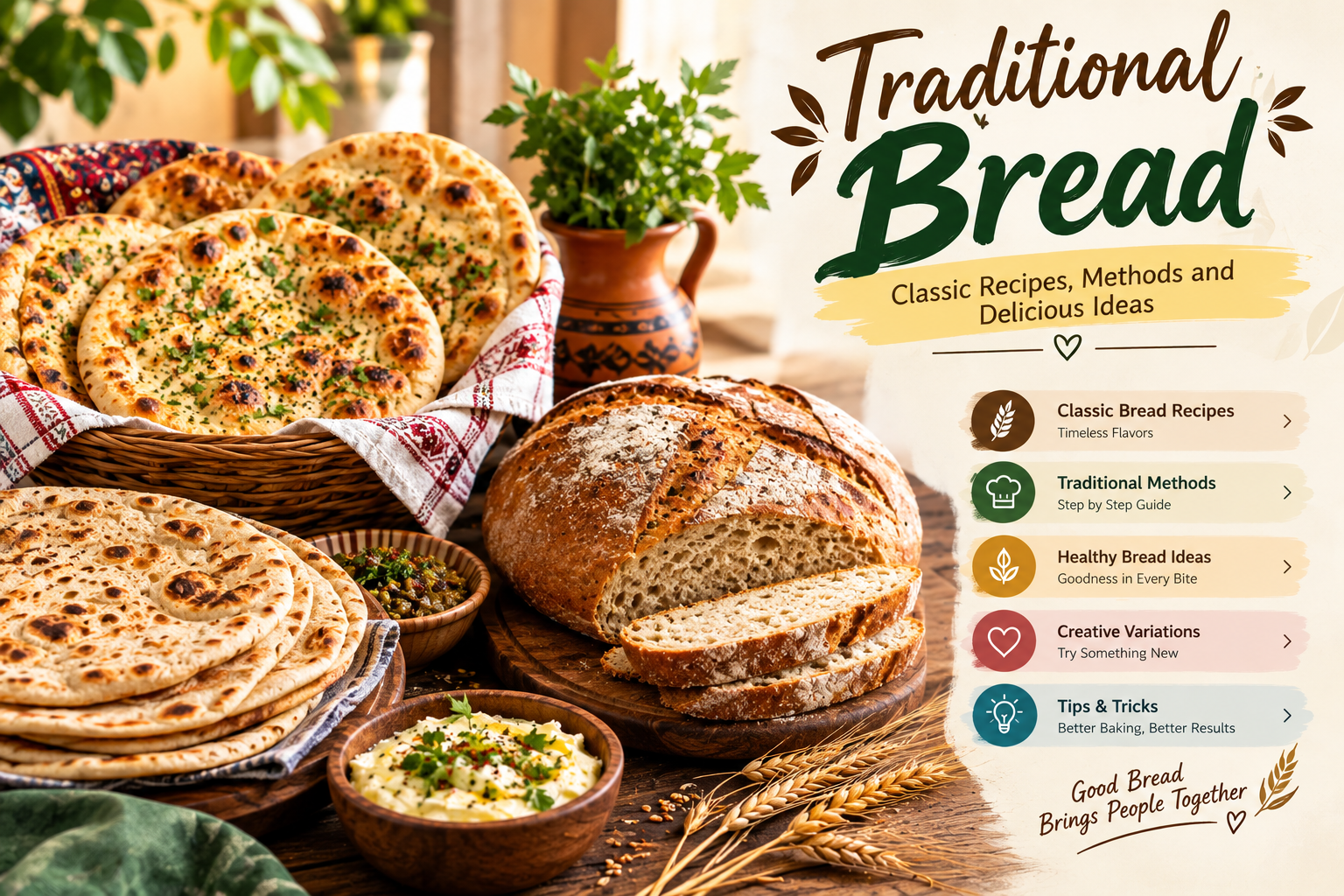
Introduction
Traditional Bread is one of the most loved foods in many parts of the world. It is simple, comforting, delicious, and easy to enjoy with almost every meal. From a warm loaf served with butter to a crispy bread served with soup, bread has a special place in everyday food.
Making bread at home can also be a wonderful experience. The smell of freshly baked bread can make the whole kitchen feel warm and welcoming. With simple ingredients such as flour, water, yeast, and salt, you can create a beautiful loaf with a soft inside and a golden crust.
Many traditional bread recipes have been passed from one generation to another. Different countries and cultures have their own methods, shapes, flavors, and baking styles. Some breads are soft and light, while others have a thick, crispy crust.
This guide will explain what Traditional Bread means, how to make it, which ingredients are important, popular varieties, useful baking tips, serving ideas, and ways to store homemade bread.
What Is Traditional Bread?
Traditional Bread usually refers to bread made using classic ingredients and familiar baking methods. The exact recipe can change from one country or family to another, but the basic idea remains simple.
A traditional loaf often contains flour, water, yeast or another leavening method, and salt. Some recipes also include milk, butter, eggs, sugar, honey, herbs, seeds, or spices.
The special thing about traditional bread is its connection to history and culture. Bread has been made in many different forms for a very long time. Families often have their own recipes that are prepared for breakfast, family gatherings, celebrations, or special occasions.
Traditional methods can also give bread a unique taste and texture. Kneading, resting, shaping, and baking all play an important role in the final result.
Fresh Bread: Easy Guide to Making Soft and Delicious Bread
Why Traditional Bread Is So Popular
There are many reasons why Traditional Bread continues to be popular today.
First, it is versatile. You can eat bread with breakfast, lunch, dinner, or snacks. It can be served with butter, cheese, eggs, vegetables, soups, meat, or spreads.
Second, homemade bread can have a wonderful fresh taste. A loaf taken from the oven has a warm smell and soft texture that is difficult to resist.
Third, bread can be made in many different styles. You can prepare a simple white loaf, whole-wheat bread, flatbread, rustic bread, seeded bread, or herb-flavored bread.
Another reason is tradition. Many people enjoy making bread because it reminds them of family kitchens and old recipes.
Main Ingredients for Traditional Bread
The ingredients for Traditional Bread are usually simple. However, each ingredient has an important job.
Flour
Flour provides the main structure of the bread. White flour can produce a soft and light loaf, while whole-wheat flour can create a deeper flavor and a heartier texture.
Water
Water brings the dough together and helps the flour develop its structure. The amount of water can change the softness of the dough.
Yeast
Yeast helps many breads rise. During fermentation, yeast produces gas that becomes trapped in the dough, helping it expand.
Salt
Salt adds flavor and also affects the dough. A small amount can make a big difference in the final taste.
Sugar or Honey
Some recipes use sugar or honey. These ingredients can add a little sweetness and help create a beautiful golden color.
Butter or Oil
Butter or oil can make some breads softer and richer. The amount depends on the recipe and the style of bread.
How to Make Traditional Bread at Home
Making Traditional Bread at home may look difficult at first, but the basic process is quite simple.
Step 1: Prepare the Ingredients
Measure all your ingredients before starting. Accurate measurements can help you achieve more consistent results.
Use flour, water, yeast, salt, and any optional ingredients required by your recipe.
Step 2: Mix the Dough
Place the flour in a large bowl. Add the yeast and salt according to your recipe. Slowly add water while mixing.
Keep mixing until the ingredients form a rough dough.
Step 3: Knead the Dough
Kneading helps develop the dough and gives the bread a better texture.
Place the dough on a lightly floured surface and knead it until it becomes smoother and more elastic. You can also use a stand mixer if you prefer.
Do not add too much extra flour. A dough that is slightly soft can produce a better loaf than a very dry dough.
Step 4: Let the Dough Rise
Place the dough in a lightly greased bowl and cover it. Leave it in a warm place until it becomes larger and puffy.
The rising time can change depending on the recipe and room temperature. Bread-baking guides also emphasize that proper rising and proofing are important parts of yeast bread making.
Step 5: Shape the Bread
After the first rise, gently remove the dough from the bowl. Shape it into a loaf, round bread, rolls, or another desired form.
Try not to press all the air out of the dough.
Step 6: Let It Rise Again
Place the shaped dough on a baking tray or in a suitable bread pan. Cover it lightly and allow it to rise again.
The second rise helps create a lighter and more attractive loaf.
Step 7: Bake the Bread
Preheat your oven according to your recipe. Place the risen dough in the oven and bake until the bread develops a golden-brown crust.
Different bread recipes require different baking temperatures and times, so always follow the specific recipe you are using.
Step 8: Cool Before Slicing
Once baked, place the bread on a cooling rack. Allowing bread to cool before slicing helps its inside finish setting properly.
Fresh bread can be very tempting, but waiting a little can give you cleaner slices and a better texture.
Traditional Bread Varieties From Around the World
One of the most exciting things about Traditional Bread is the huge variety available around the world.
French Bread
French bread is known for its attractive shape and crispy crust. Baguettes are one of the most famous examples.
Italian Bread
Italian breads come in many forms. Some have a rustic crust, while others are soft and perfect for sandwiches.
Sourdough Bread
Sourdough uses a fermented starter instead of relying only on commercial yeast. It often has a slightly tangy flavor and chewy texture.
Flatbread
Flatbreads are prepared in many cultures. They can be cooked on a hot surface instead of being baked like a large loaf.
Whole-Wheat Bread
Whole-wheat bread uses whole-grain flour and often has a rich, earthy flavor. It can be used for sandwiches, toast, and everyday meals.
Seeded Bread
Seeds such as sesame, sunflower, pumpkin, or flax can be added to bread for extra texture and flavor.
Traditional Bread Baking Tips
Good Traditional Bread depends on patience and attention to small details.
Measure Ingredients Carefully
Too much flour can make dough dry and heavy. Too much water can make it difficult to handle. Measuring carefully gives you better control.
Pay Attention to Dough Texture
Do not focus only on the clock. Look at the dough. It should become smoother and expand during rising.
Do Not Rush the Rising Process
Yeast needs time to work. A cold kitchen may slow the process, while a warmer environment may make the dough rise faster.
Avoid Too Much Flour
Adding large amounts of flour while kneading can make bread dense. Add only what is necessary to handle the dough.
Preheat the Oven
A properly heated oven helps the bread bake evenly and develop a good crust.
Let the Bread Cool
Cooling is an important final step. Cutting extremely hot bread can make the inside appear sticky or affect its texture.
How to Make Traditional Bread More Flavorful
You can easily customize Traditional Bread without changing its basic character.
Try adding fresh herbs such as rosemary, thyme, or parsley. You can also add sesame seeds, sunflower seeds, garlic, olives, cheese, or roasted onions.
For a slightly sweet loaf, honey or dried fruits can be used. Cinnamon and raisins can create a delicious breakfast bread.
Another option is to use different types of flour. Combining white flour with whole-wheat flour can create a balanced flavor and texture.
Always remember that additional ingredients can change the moisture and structure of the dough, so adjust your recipe carefully.
How to Serve Traditional Bread
There are countless ways to serve Traditional Bread.
For breakfast, serve warm slices with butter, jam, honey, cheese, or eggs.
For lunch, use bread for sandwiches filled with vegetables, chicken, cheese, or other favorite ingredients.
At dinner, bread can be served beside soup, salad, pasta, roasted vegetables, or grilled foods.
Rustic bread can also be placed in a beautiful bread basket when serving guests. A warm loaf with butter and herbs can make a simple meal feel more special.
You can also toast leftover slices and serve them with spreads or use them to make homemade croutons.
Traditional Bread for Family Meals
Traditional Bread is perfect for family meals because one loaf can be enjoyed in many different ways.
Children may enjoy soft slices with butter or jam. Adults may prefer toasted bread with eggs, cheese, or vegetables.
Homemade bread can also become part of family traditions. Baking together gives family members an opportunity to spend time in the kitchen and learn useful cooking skills.
You can prepare one large loaf for the family or make several small rolls so everyone gets an individual piece.
Common Bread Baking Mistakes
Beginners sometimes make mistakes while preparing Traditional Bread, but most problems are easy to understand.
Dough Does Not Rise
This can happen if the yeast is inactive, the environment is too cold, or the dough has not had enough time.
Bread Is Too Dense
Dense bread can result from too much flour, insufficient rising, or problems with dough development.
Bread Is Too Dry
Too much flour or overbaking can produce a dry loaf.
Crust Is Too Hard
Some breads naturally have a crisp crust, but excessive baking can make it harder than desired.
Bread Falls After Rising
This can happen when dough rises too much or is handled too roughly before baking.
The key is to observe your dough and learn how it behaves in your own kitchen.
How to Store Traditional Bread
Freshly baked Traditional Bread is best enjoyed when it is fresh, but proper storage can help maintain its quality.
Once the bread has cooled completely, keep it in a suitable bread bag or airtight container depending on the type of bread.
Avoid storing bread while it is still very hot because trapped moisture can affect the crust.
For longer storage, bread can be frozen. A well-wrapped loaf can be stored in the freezer and thawed when needed. King Arthur Baking also recommends cooling bread completely before wrapping it for freezing.
If you know you will not finish a loaf quickly, slicing it before freezing can make it easier to take out only the amount you need.
Traditional Bread for Special Occasions
Bread is not only an everyday food. Traditional Bread can also be part of celebrations and special meals.
Different cultures prepare special breads for holidays, weddings, family gatherings, and religious or cultural events.
Decorative shapes, braids, seeds, herbs, and special toppings can make a simple loaf look beautiful.
You can create your own special bread by shaping the dough differently or adding ingredients that your family enjoys.
Simple Ideas for Homemade Traditional Bread
If you are new to bread baking, start with a simple loaf. Once you become comfortable with mixing, kneading, rising, shaping, and baking, you can try more interesting recipes.
You can experiment with:
- Herb bread
- Seeded bread
- Whole-wheat bread
- Rustic bread
- Garlic bread
- Cheese bread
- Olive bread
- Flatbread
- Soft sandwich bread
- Sourdough-style bread
Professional baking resources also offer a wide range of bread recipes and techniques for beginners and experienced bakers.
Why Homemade Traditional Bread Is Special
There is something special about making Traditional Bread with your own hands.
You choose the ingredients, prepare the dough, watch it rise, shape it, and finally see it become a beautiful golden loaf.
The process can also be relaxing. Kneading dough and waiting for it to rise can give you time away from busy daily routines.
Most importantly, homemade bread gives you the chance to create food that can be shared with family and friends.
Final Thoughts
Traditional Bread is much more than a basic food. It represents comfort, family, culture, and simple homemade cooking. Its ingredients may be simple, but the results can be delicious and satisfying.
Whether you prefer a soft sandwich loaf, rustic bread, flatbread, whole-wheat bread, or a crusty artisan-style loaf, there are many ways to enjoy classic bread.
Start with a simple recipe, measure your ingredients carefully, give the dough enough time to rise, and do not be afraid to practice. With experience, you can develop your own favorite methods and flavors.
A warm homemade loaf served with butter, cheese, soup, or a family meal can turn an ordinary day into something special. That is why Traditional Bread continues to be loved by home bakers and families around the world.
1 thought on “Traditional Bread: Classic Recipes, Methods and Delicious Ideas”